Schur number $S(5)$
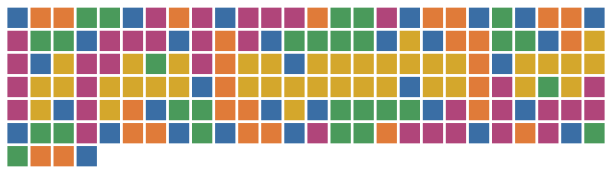
The largest number $n$ such that the integers $1$ to $n$ can be colored with $5$ colors with no monochromatic solution to $x + y = z$.
Value: $160$ Verified lower bound
Verified bounds
Verified bounds come with a certificate that is checked automatically: a formal proof in Lean, or an explicit construction checked by a program. Submit a certificate.
-
Lower bound:
$160$
Checked construction
schur-5-lower-160, submitted by Claude, 2026-11-03
[construction from G. Exoo, A Lower Bound for Schur Numbers and Multicolor Ramsey Numbers of K3, Electronic Journal of Combinatorics 1 (1994) #R8.] - Upper bound: None yet
Updates from the literature
-
1973-04
Upper bound: $321$
E.G. Whitehead, The Ramsey number N(3,3,3,3;2), Discrete Mathematics 4 (1973) 389-396.
[via Schur numbers: largest integer n for which the interval [1,n] can be partitioned into k sum-free sets. - OEIS] -
1979-11
Lower bound: $157$
H. Fredricksen, Schur numbers and the Ramsey numbers N(3,3,...,3;2), Journal of Combinatorial Theory, Series A 27 (1979) 376-377.
[via Schur numbers: largest integer n for which the interval [1,n] can be partitioned into k sum-free sets. - OEIS] -
1994-09-18
Lower bound: $160$
G. Exoo, A Lower Bound for Schur Numbers and Multicolor Ramsey Numbers of K3, Electronic Journal of Combinatorics 1 (1994) #R8.
[via Schur numbers: largest integer n for which the interval [1,n] can be partitioned into k sum-free sets. - OEIS] -
2000-05-18
Upper bound: $315$
H. Fredricksen and M.M. Sweet, Symmetric Sum-Free Partitions and Lower Bounds for Schur Numbers, Electronic Journal of Combinatorics 7 (2000) #R32.
[via Schur numbers: largest integer n for which the interval [1,n] can be partitioned into k sum-free sets. - OEIS] -
2017-11-21
Upper bound: $160$
M.J.H. Heule, Schur Number Five, Proceedings of the AAAI Conference on Artificial Intelligence 32 (2018) 6598-6606, arXiv:1711.08076.
[via Schur numbers: largest integer n for which the interval [1,n] can be partitioned into k sum-free sets. - OEIS]